Authorised distributor of CTC vibration analysis hardware CTC Authorized Distributor
Restricted access · safety · critical components

Wireless Vibration Sensor Analysis

See the actual condition of your more critical plant and equipment on a phone or desktop — daily if you want — including internal items such as bearings.

The problem

When the data point cannot be reached

Manual vibration readings need an accelerometer placed on the machine, by hand, while it is running. On a lot of plant that simply is not possible.

Common vibration analysis restrictions

  • Limited access to sensor data collection points
  • Safety regulations restricting access to running equipment
  • Equipment running inside safety or noise enclosures, such as compressors
  • Height restrictions limiting access
  • Equipment locked out when not in production
  • Dangerous environments during production — quarries, aggregates, plant enclosures, process applications
  • Moving rotating equipment — container cranage, oil and gas drilling equipment
  • Moving pulleys and cranage equipment
  • Above average noise pollution
  • Plant located in restricted security areas

This list is not exhaustive — there are many situations where access is restricted for manual vibration analysis on rotating equipment, especially during production.

The solution

A permanently mounted wireless sensor on the data point, a long-range gateway, and either the supplied web app or your company's existing software. Readings are taken automatically and reviewed from your desk.

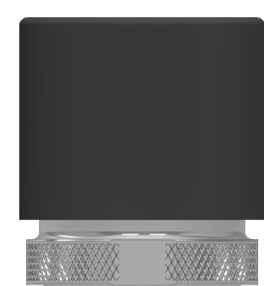
CTC ConnectSens WS300 wireless triaxial vibration sensor, stainless steel base with nylon cap
CTC ConnectSens wireless sensor — 43 mm tall, 130 g, stud mounted
How it connects

Sensor to gateway to software

  1. Sensor on the data point

    Permanently mounted on the machine, taking readings automatically.

  2. Long-range gateway

    Collects from up to 30 sensors and joins your plant network.

  3. Web app or your own software

    Reviewed on desktop or phone, wherever you happen to be.

Readings pass from the sensor to the gateway over Bluetooth Low Energy, then onto your plant network by Wi-Fi or Ethernet.

Advantages

Why wireless changes the programme

A triaxial sensor records vertical, horizontal and axial planes from a single mounting point — so one sensor on the identified data point gives the analyst what previously took three manual readings.

That lets the analyst predict root cause failures of bearings and equipment well in advance of a reactive failure. Our certified technicians can also assist and train your selected staff to measure and compare data against history.

  • Save unplanned production downtime
  • Plan strategic outages
  • Streamline maintenance costs through preventive measures
  • Utilise labour efficiently — less unplanned overtime
  • Ensure availability of planned spares
  • Minimise risk of component damage
  • Predict root cause of failures well in advance of breakdowns
  • No need to enter restricted or unsafe areas to take a reading
The equipment

CTC ConnectSens sensors and the ACCESS2000 gateway

We supply and commission CTC Connect wireless hardware as an authorised CTC distributor — see the full CTC products & supplies range. Specifications below are taken from the manufacturer's datasheets.

CTC ConnectSens wireless vibration sensor

Single axis sensor

CTC ConnectSens WS200

Wireless single axis dynamic vibration signal capture sensor with temperature output. Suited to data points where one measurement plane is enough.

Frequency response (+9.5/−6 dB)0.5 Hz to 10 kHz (30 to 600 000 CPM)
Frequency response (±10%)0.5 Hz to 1 kHz (30 to 60 000 CPM)
Resonant frequency (+9.5 dB)5.5 kHz (330 000 CPM)
Dynamic rangeConfigurable: ±8 g, ±16 g, ±32 g, ±64 g
Sample resolution16 bits
Temperature measurement range−40 °C to 80 °C
Automatic reading intervalConfigurable in hours, 0 to 24
Sensing structureMEMS
CTC ConnectSens WS300 wireless triaxial vibration sensor

Triaxial sensor

CTC ConnectSens WS300

Wireless triaxial dynamic vibration signal capture sensor with temperature output — vertical, horizontal and axial planes measured from a single mounting point.

Frequency response, Y and Z axes (+9.5/−6 dB)0.5 Hz to 10 kHz (30 to 600 000 CPM)
Frequency response, X axis (+9.5/−3 dB)0.5 Hz to 7 kHz (30 to 420 000 CPM)
Resonant frequencyY and Z axes 5.5 kHz; X axis 3.5 kHz
Dynamic rangeConfigurable: ±8 g, ±16 g, ±32 g, ±64 g
Sample resolution16 bits
Temperature measurement range−40 °C to 80 °C
Sensing structureMEMS — triaxial

Shared build and environmental rating — WS200 and WS300

Power sourceField replaceable 3.6 V 1 Ah lithium battery pack
Battery lifeUp to 4 years, based on 2 readings per day at 20 °C with good signal strength
Operating temperature range−40 °C to 80 °C
Ingress protectionIP67, compressed silicone O-ring seal
Shock protection5 000 g peak for 0.5 ms powered; 10 000 g peak for 0.2 ms unpowered
Wireless protocolBluetooth® Low Energy 5.2
Operating rangeLine of sight 365 m (1 200 ft)
Weight130 g (4.6 oz)
Case materialStainless steel base with nylon cap
Mounting1/4-28 blind tapped hole; 1/4-28, M6×1 or M8×1.25 stud supplied
SIL ratingSIL 2
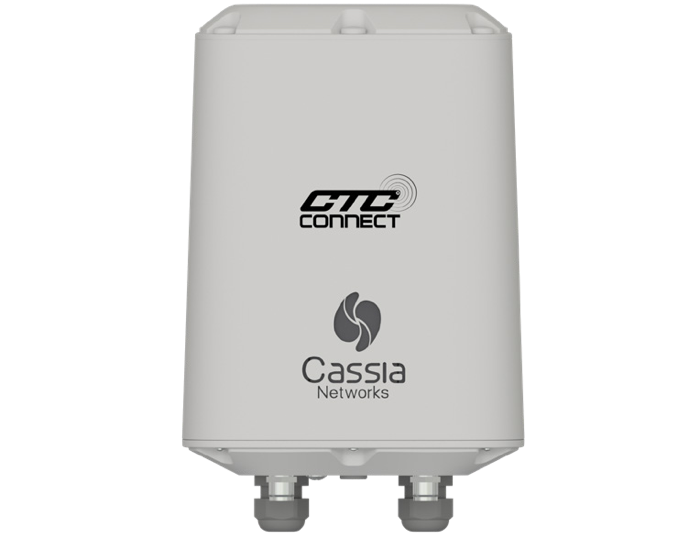
CTC ACCESS2000 long-range wireless gateway in a white weatherproof enclosure

Gateway & network controller

CTC ACCESS2000

Long-range wireless gateway and network controller, preloaded with the ConnectView web app. It receives readings from the sensors and passes them onto your network by Wi-Fi or Ethernet.

Network connectivityWi-Fi (802.11 a/b/g/n/ac) or Ethernet
Sensor communicationBluetooth® Low Energy 5.2 from CTC ConnectSens sensors
Input count30 sensor inputs — mix and match WS100, WS200 and WS300
Connected sensor range140 m guideline in industrial environments
Supported signal strength−20 dBm to −75 dBm
ProtocolsWebSocket, MQTT IoT and Modbus
Storage64 GB
PowerDC 12 V / 2 A, or 57 Vdc 350 mA over PoE
Power consumptionUp to 2.5 W in normal use
IP ratingIP66, ABS plastic enclosure
Temperature range−40 °C to +65 °C
Approvals relevant to South AfricaICASA and NRCS, alongside FCC, CE, RoHS and others

A note on range. The sensors are rated to 365 m line of sight, but wireless range depends heavily on the industrial environment. CTC gives 140 m as a practical guideline and recommends one gateway per 30 sensors. Reliable operation needs a received signal strength of at least −75 dBm, so gateway placement is something we confirm on site.

ConnectView web app

Your data, on your own network

The web app is included with any Connect wireless gateway. It runs off your local network — you own your data and control your security, which means no recurring data fees when using your own network.

Configure and group

Configure dynamic ConnectSens sensors, give them nicknames and assign them to machine groups.

View and export

Dynamic sensor signal plots and FFT, viewable in the app and exportable for your own records.

Alert levels

Set early warning and critical alert levels per sensor, and keep an eye on battery life.

Already have condition monitoring software?

An API allows OEM customers to use their own software to communicate with the ConnectSens wireless sensors through a Connect wireless gateway — so the sensors can feed the system your team already uses.

Increased production with reduced costs

Discuss a wireless installation

Tell us which assets are hard to reach and we will work out the sensor and gateway layout your plant needs.

CTC, ConnectSens, ConnectView and ACCESS2000 are products of Connection Technology Center, Inc. The Bluetooth® word mark and logos are registered trademarks owned by Bluetooth SIG, Inc. Other trademarks and trade names belong to their respective owners.